Thinning pine plantations is a process that occurs naturally with the help of Mother Nature or better yet, a forester. I am an advocate of thinning pines as soon as possible to keep the stand healthy and growing at its maximum growth rate. Thinning opens the stand so the trees grow, changes character of the woods and enhances the wildlife habitat.
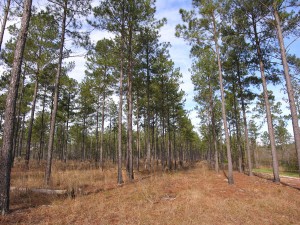 First, let’s look at why we should thin. Different landowners have different goals which can change the timing of thinning. If you are looking at managing for maximum returns from timber harvest, we tailor our management practices to facilitate growth of sawtimber and/or poles. These products are the most valuable. When figuring in the time value of money, it serves no purpose to grow trees past a certain diameter as you will get no more money for the product. Therefore, we grow trees as fast as possible to get them as large as possible or to the more valuable sawtimber size product.
We plant a certain number of quality trees per acre in order to get good growth and stimulate the natural pruning of the lower limbs. It is time to thin, when you see the lower limbs beginning to die and fall off, tree diameters have reached a certain size and tree height is adequate. You should not wait so long as to lose the proper percentage of crown (tree top) that you loose growth potential.
Some soils are better than others, varying the timing of first thinning. Typically, we thin around the age of fifteen years. We will groom the stand again five to seven years later. The purpose of second grooming is to take out less desirable low quality trees and save the best crop trees. Final harvest will be around thirty five years of age.
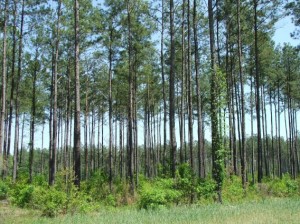 There are several factors that will influence when we will harvest. First would be stand health and quality. There are times when disease, seedling quality, pine beetles, or fire will dictate an early harvest. In rare situations, the harvest may even be a final or clear-cut harvest to start over. Even though we have provided basic guidelines for harvesting, we can still harvest timber at any time during the rotation or life of the timber once it reaches merchantable size around age 14.
Most timber harvest are a result of sound management that follows the goals of the landowner. Some other management criteria are wildlife management, aesthetics, and sawtimber production. If we are managing for wildlife, we may thin heavier than normal or leave special buffers. Most sawtimber rotations thin at ages 15, 23 and final harvest around 35, as mentioned above. Soil productivity may vary the timing somewhat. We manipulate timber stands for aesthetics based on what the landowner perceives to be beautiful or appealing.
Price deserves a paragraph for itself. Timber is not an annual crop that has to be harvested exactly at a certain age. It does not make a huge difference if we harvest this year or in two years. Most likely, the timber will be fine and remain in good condition. Personal tax preferences or timing of other investments may influence a timber harvest. Price does fluctuate heavily, influencing when we may want to harvest.
It is very important for pulpwood thinning to be done in a timely manner to keep stands healthy and growing. The second or final harvest of higher value products should be timed with a good market. Weather will have an influence on pricing, too. Weather can cause a basic supply and demand curve that will produce significant swings in the market price of all products.
Green Hill land & Timber works very hard to bring all of these factors together in managing our clients’ timber investment. We would like the opportunity to help you with your land and timber investment.
 Land.com recognizes Jack Frankhouser as a top producer in the Southeast. Jack's hard work, expertise, and professionalism has helped many people with their land.