We’ve written about the positive impact of a second thinning on wildlife habitat. All pine plantations need thinning. Whether it is a first thinning or subsequent thinnings, you will experience increased growth, better stand health and improved wildlife habitat. But what does good timber management look like after the harvest?
 There are different reasons for thinning and how we manage timber to reach the objective or management goal. For this objective, we are looking to improve wildlife habitat and management food sources and habitat specifically deer and turkey. One requirement was that thinning operations was not to take place during deer and turkey hunting season. The timber was sold during average market conditions and reputable timber companies were considered for the sale.
Before the Harvest
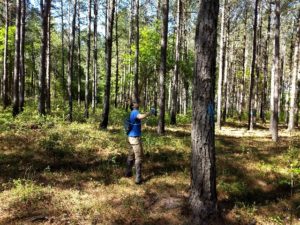
 We marked about 325 acres and, so far, have used over 100 gallons of paint. The goal was to mark and remove/harvest the inferior, less desirable, smaller trees and save the grade or high quality dominant and co-dominant timber. The residual stand was to be left open with trees spaced such that crowns do not touching, allowing room to grow. This also allows sunlight to the forest floor, promoting browse for wildlife. Some inferior trees were left to maintain canopy spacing. Smaller hardwood trees were harvested or cut down to open the stand promoting your high protein forage and food source.
After the Harvest
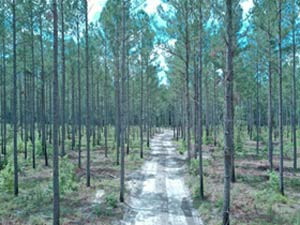
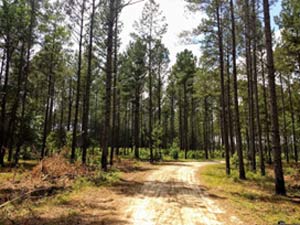 The second stage of the process is just after the harvest. Harvesting the timber radically changes the character of the forest. As you can see in the pictures, there is a hugely dramatic change in forest. The stand is now open, and the “clutter” is gone. The crowns and tree stems look very good with mostly high-quality timber left in the residual timber stand. In this timber stand, the trees will grow for another 5 to 8 years and will probably be thinned again once the stand reaches crown closure again.
The forest floor, on the other hand, is littered with tops, limbs, hardwood stems and has paths made by logging equipment. The stand will be control-burned and residual logging debris will begin to melt down into earth as organic matter. After this winter’s burn and spring sprouting begins, the character of the tract will again take on another change in character. The stand will begin to transform into that beautiful mature, open plantation timber look. Most of the hardwood sprouts will be killed, slash will burn, and fresh, high- protein sprouting of forbes, legumes and grasses will begin.
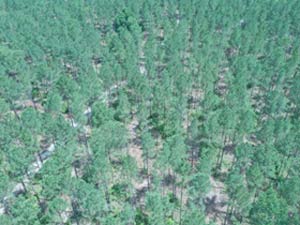 Good timber management requires more prescribed burns and time for the logging debris to deteriorate over the next couple of years. The residual timber will realize stem diameter increase and the canopy will begin to spread once again. Five or so years later, the canopy will again close, prompting one last grooming of the timber.
The immediate goal of managing forage for wildlife has already begun with the onset of spring. The areas that have been thinned are already beginning to reveal fresh new sprouts throughout the timber stand and the activity of the harvesting equipment has triggered the curiosity of the deer and turkey. The wildlife is already roaming through the stand, enjoying fresh sprouts and foraging on new growth.
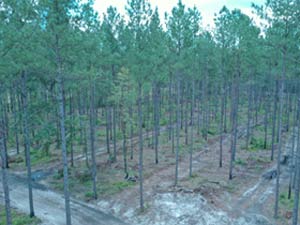 The timber has emerged as a beautiful open stand with a view that was not there before. Where you could only see clutter and bushes for fifty yards, the forest is now a grand view of high-quality timber for several hundred yards. Not only is ideal for turkey and deer to meander through the open forest, but the landowner has achieved his goal of promoting high quality browse for the wildlife. Another reward of good timber management is the immensely pleasant experience being in the outdoors, enjoying the view of the beautiful timber, and watching wildlife slip through the forest.
 Land.com recognizes Jack Frankhouser as a top producer in the Southeast. Jack's hard work, expertise, and professionalism has helped many people with their land.